
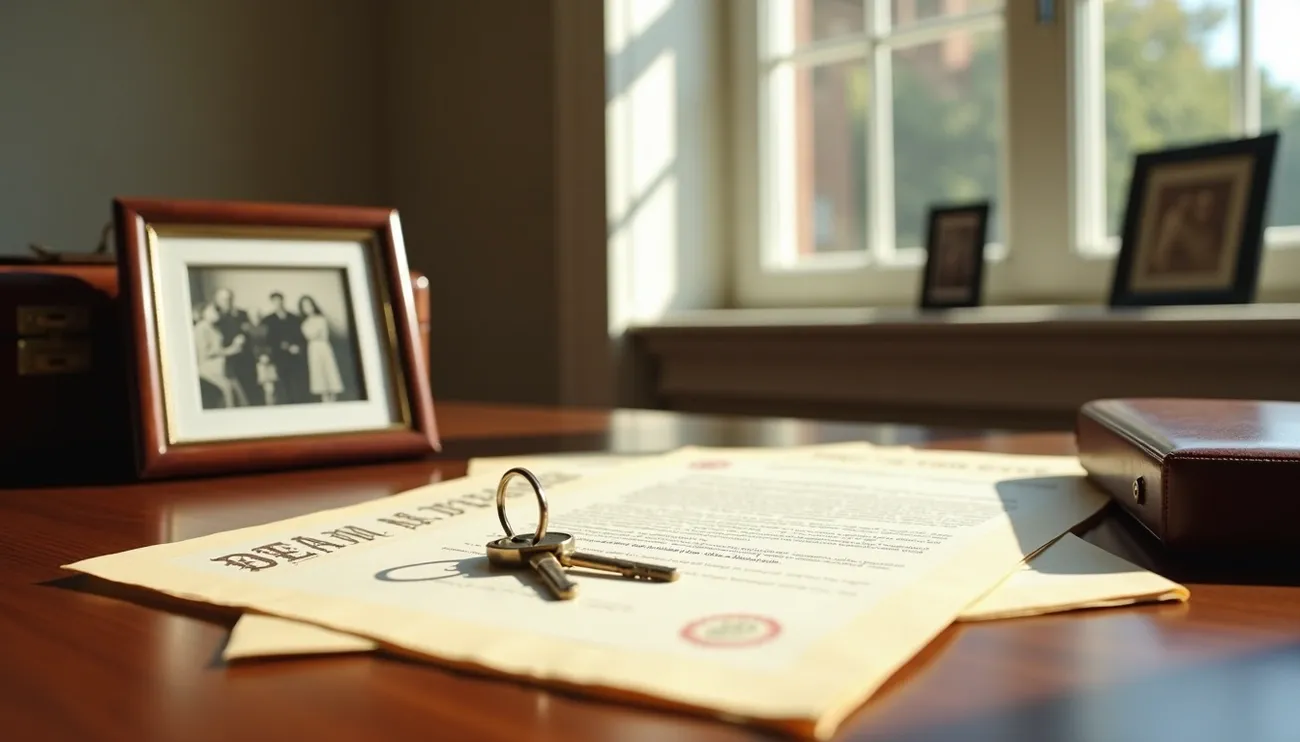
 The process of dealing with California probate law can feel overwhelming after inheriting property from a loved one. California probate sales usually take nine months to several years to complete. This is a big deal as it means that the standard 44-day timeline for regular home sales.
The court-supervised legal process of probate involves identifying assets, paying debts, and distributing property after someone’s death. Your loved one’s estate might require probate, especially when you have assets exceeding the $184,500 threshold (as of 2024). The process requires filing various tax returns – a final income tax return for the deceased and potentially an estate tax return.
We’ll help you understand everything about selling inherited property under California probate law. Our practical, straightforward advice covers the essentials from determining probate requirements to managing complex probate sales.
What is probate and when is it required in California?
Probate is the legal way to distribute assets and settle debts after someone passes away. People use this term as both a noun (“going through probate”) and a verb (“to probate a will”), which makes it confusing for anyone dealing with it for the first time.
Understanding probate meaning and purpose
Probate boils down to a court-supervised process that manages someone’s estate after they die. The state uses this process to make sure assets and debts pass to the next generation in an orderly way.
California probate courts handle six main tasks:
- Preventing fraud – Courts verify document authenticity, protecting against forged or fraudulent wills
- Protecting heirs and beneficiaries – Ensuring all interested parties are notified about proceedings
- Safeguarding creditors’ rights – Providing structured notice to creditors to make legitimate claims
- Ensuring accountability – Requiring detailed records and reports from executors
- Providing dispute resolution – Offering a structured environment to resolve family conflicts
- Transferring clear title to assets – Establishing clean title transfer to beneficiaries
When is probate required in California?
California requires probate when someone’s probate assets exceed certain values. These values change with inflation:
- For deaths on or after April 1, 2025: $208,850
- For deaths between April 1, 2022 and March 31, 2025: $184,500
- For deaths before April 1, 2022: $166,250
A new law takes effect April 1, 2025, raising the threshold to $750,000 for real property that served as the person’s primary residence.
Your estate might need probate whatever its value if people dispute the will’s validity, heirs disagree, or creditors’ claims become complicated.
Assets that avoid probate
The good news is that not all assets need to go through probate. Some assets transfer to new owners without court involvement:
- Assets held in living trusts – Property placed in a valid living trust bypasses probate entirely
- Jointly owned property – Assets with joint tenancy or community property with right of survivorship
- Accounts with beneficiary designations including:
- Life insurance policies
- Retirement accounts (401(k)s, IRAs)
- Payable-on-death (POD) bank accounts
- Transfer-on-death (TOD) securities accounts
- Real estate with transfer-on-death deeds – Property transfers directly to beneficiaries
- Vehicles with TOD registration – California allows vehicles to be registered with transfer-on-death beneficiaries
California offers simpler options for small estates. Heirs can use affidavits or simplified court procedures instead of full probate if the total value stays below the current threshold of $184,500. This process starts 40 days after death.
Knowing which assets need probate helps you plan ahead and could save your family time and money. Many families can avoid probate completely through smart estate planning with tools like living trusts.
Who handles the estate and how are they appointed?
Someone needs to manage the estate after a person dies. This role ensures that debts are paid and assets are distributed according to California probate law.
Executor vs. administrator: what’s the difference?
The person managing a deceased person’s estate can be called either an executor or administrator. The circumstances of their appointment make the difference.
An executor is someone the deceased person named in their will. This person follows the instructions in the will and acts as the deceased’s chosen representative. The executor’s power comes from the will, but they still need formal appointment by the probate court.
The court appoints an administrator in these cases:
- No valid will exists (the person died “intestate”)
- The will fails to name an executor
- The named executor declines to serve, is disqualified, or has died
People now commonly call both executors and administrators “personal representatives.” They share the same core duties. They must act as fiduciaries, which means they have a legal duty to manage the estate for its benefit rather than their own gain.
How to get Letters of Administration or Testamentary
The personal representative needs legal authority from the court before taking any action on behalf of the estate. This comes as either Letters Testamentary or Letters of Administration.
The steps include:
- Filing a petition for probate in the Superior Court where the deceased lived
- Publishing a notice of the petition in a court-approved newspaper
- Notifying all interested parties about the hearing date
- Attending a court hearing where the judge reviews the will’s validity and the applicant’s qualifications
- Receiving the official Letters once approved
The court issues Letters Testamentary to executors named in a valid will and Letters of Administration when there’s no will or named executor. These documents let you prove your authority to banks, government agencies, and other institutions.
You can usually get these documents in six to eight weeks if your paperwork is complete. Disputes or incomplete documentation might cause delays.
Priority of appointment under California probate laws
California law sets a clear order of priority for administrator appointments when there’s no will. This order must be followed unless people with higher priority choose not to serve.
The priority order for appointment is:
- Surviving spouse or registered domestic partner
- Children
- Grandchildren
- Other issue (great-grandchildren)
- Parents
- Siblings
- Issue of siblings (nieces/nephews)
- Grandparents
- Issue of grandparents (aunts/uncles, cousins)
- Children of a predeceased spouse
- Other next of kin
- Public administrator
- Creditors
- Any other person
California requires personal representatives to be at least 18 years old and of sound mind. Executors named in a will can live outside California, but administrators must live in the United States.
Multiple people with equal priority (like several children of the deceased) must agree on who will serve. The court might appoint one or more of them, the public administrator, or someone else in the same or next lower priority class if they can’t agree.
Anyone with priority can nominate another person by signing a “Declination to Act as Administrator and Nomination” document.
Steps to selling inherited property through probate
Selling a home through probate requires several specific steps to comply with California probate law. This guide will help you save time and avoid getting pricey mistakes.
Inventory and appraisal of estate assets
The personal representative must complete a formal inventory of all estate assets within four months after receiving Letters of Administration or Testamentary. This vital document, the Inventory and Appraisal (form DE-160), lists and values all property the deceased owned at the time of death.
The inventory process divides assets into two categories:
- Cash assets (bank accounts, cash, checks) which the personal representative can value
- Non-cash assets (real estate, vehicles, collectibles) which need appraisal by a court-appointed probate referee
The probate referee’s valuation of real estate becomes crucial because it sets the minimum acceptable sale price—typically 90% of the appraised value.
Hiring a California probate real estate agent
The next step after property appraisal is finding an experienced probate real estate specialist. Probate sales have specific legal requirements that just need specialized knowledge.
Here are questions to ask potential agents:
- Do they understand the difference between full and limited authority under the Independent Administration of Estates Act?
- Can they explain the overbidding process?
- Are they familiar with probate-specific forms and timelines?
A certified probate real estate specialist (CPRES) has completed specialized training to handle these complex transactions.
Listing the property and marketing it
The property can be listed once the personal representative has proper authority. Most probate properties sell “as-is,” which attracts investors looking for potential value.
Legal notices play a key role in marketing. Cases with limited authority require a “Notice of Sale” published at least three times over a minimum of 10 days before the sale.
Court confirmation process for probate sales
The court confirmation depends on the personal representative’s authority level:
With full authority, representatives can sell without direct court supervision by sending a “Notice of Proposed Action” to heirs, who have 15 days to object.
With limited authority, court confirmation becomes mandatory. After accepting the original offer, a court hearing gets scheduled 30-45 days out. Other buyers can submit higher bids through an auction-style overbidding process.
The minimum overbid amount must exceed the original bid by at least 10% on the first $10,000 and 5% on any amount over $10,000.
Finalizing the sale and transferring title
The escrow can close after court confirmation (or after the notice period expires without objections under full authority). The estate’s bank account must hold the proceeds until probate concludes—heirs don’t receive funds right away.
The title company needs specific legal documents from the personal representative before completing the transfer, including certified copies of the Letters and court orders approving the sale.
Paying debts, taxes, and distributing assets
The probate process continues with several key financial steps after the property sale ends. The personal representative needs to pay all debts and distribute remaining assets properly.
Notifying creditors and handling claims
The personal representative needs to let all known creditors know about the deceased by sending a Notice of Administration to Creditors (form DE-157). Creditors must follow strict deadlines to file claims. They have four months after Letters are issued or 60 days after getting notice, whichever comes later. This notice starts the timeline for creditors to make claims against the estate.
The personal representative must respond in writing to valid claims using the Allowance or Rejection of Creditor’s Claim form. They can accept the claim, reject it, or work out reduced payments to save assets for beneficiaries.
Filing estate and income taxes
California doesn’t need an estate tax return for deaths after December 31, 2004, unless someone files a federal estate tax return (Form 706). The personal representative must file the deceased’s final personal income tax returns for their last tax year.
The estate needs a California Fiduciary Income Tax Return (Form 541) if it makes money during probate. Missing tax deadlines can lead to penalties and longer probate proceedings.
Final accounting and court approval
The personal representative must file a final accounting with the court before closing probate. This should show:
- Property values at the beginning of the accounting period
- Income received and expenses paid
- Gains or losses from asset sales
- Distributions made to beneficiaries
This complete document shows all financial transactions related to the estate. The court must approve this accounting before final distribution.
Distributing proceeds to heirs
The remaining assets can go to heirs according to the will or California’s intestate succession laws once debts and taxes are paid and the court approves the final accounting. The personal representative needs to get receipts from beneficiaries for all distributions.
The court might allow preliminary distributions before final settlement if it sees enough funds to cover potential creditor obligations, taxes, and ongoing litigation.
How to avoid probate in future estate planning
Your loved ones can avoid the stress and expense of California probate through proper estate planning. Several strategies help transfer assets without going through the probate process.
Using living trusts and joint ownership
A revocable living trust stands out as one of the most powerful tools that helps you skip probate. You can transfer assets into the trust and still maintain complete control during your lifetime. Your successor trustee distributes assets according to your wishes without court involvement after you pass away.
Joint ownership offers a straightforward solution. Property held as joint tenancy with right of survivorship automatically passes to surviving owners. Married couples achieve the same result through community property with right of survivorship. Adding someone just to avoid probate might create tax complications and liability issues.
Transfer-on-death deeds in California
California law has allowed transfer-on-death (TOD) deeds for residential property since 2016. These deeds let you name beneficiaries who automatically receive your property after death while you keep current ownership. The process needs notarization, two witness signatures, and recording within 60 days. This option will apply to your main residence valued up to $750,000 starting April 2025.
When probate is not necessary
Your estate can skip probate for:
- Assets with beneficiary designations (life insurance, retirement accounts)
- Payable-on-death bank accounts
- Small estates under $184,500 (as of 2022-2025)
- Property transferred to a surviving spouse through a simplified spousal property petition
Conclusion
Selling inherited property through California’s probate process can be challenging. The process takes much longer than regular home sales and might stretch from weeks to years. Personal representatives must follow strict legal steps to handle creditor claims, taxes, and court requirements.
You need to know what starts the probate process. The court must supervise most estates worth over $184,500, but this amount goes up to $208,850 for deaths after April 1, 2025. The main home gets special treatment with a higher limit of $750,000 starting April 2025.
The good news is that some assets don’t need probate at all. Living trusts, joint ownership, accounts with named beneficiaries, and transfer-on-death setups skip the court process completely. This shows why planning ahead matters so much.
Selling inherited property needs extra steps beyond regular home sales. Personal representatives must get the right authority and complete inventories. They need to work with special agents and often need court approval. This careful process protects everyone’s interests and ensures fair distribution.
Probate’s complexities teach us important lessons. Setting up living trusts, owning property jointly, and using transfer-on-death arrangements help protect our families. These tools let them focus on healing instead of legal issues during tough times.
Probate might look scary at first, but knowing how it works helps families direct this difficult process confidently. With the right help and planning, you can handle inherited property sales while keeping your loved one’s wishes intact.
Inherited property often raises related ownership questions. If you co-inherited real estate with siblings or other heirs, see our guides on tenants in common ownership in California and filing a partition action in California when co-owners cannot agree. Before any sale closes, our guide to spotting and fixing title issues at closing explains how to clear liens and chain-of-title problems that frequently surface in probate transactions.
FAQs
Q1. How long does the probate process typically take in California? The probate process in California usually takes between nine months to several years to complete, significantly longer than a standard home sale which averages 44 days.
Q2. What is the threshold for probate in California? As of 2024, probate is generally required when the total value of a deceased person’s probate assets exceeds $184,500. This threshold will increase to $208,850 for deaths on or after April 1, 2025.
Q3. Who can serve as a personal representative in a California probate case? The priority for appointment starts with the surviving spouse or registered domestic partner, followed by children, grandchildren, parents, and siblings. To qualify, a person must be at least 18 years old and of sound mind.
Q4. What are some ways to avoid probate in California? Probate can be avoided through the use of living trusts, joint ownership with right of survivorship, transfer-on-death deeds for residential property, and by designating beneficiaries on accounts like life insurance and retirement plans.
Q5. Is court confirmation always required when selling inherited property through probate? Court confirmation depends on the personal representative’s authority. With full authority, they can sell without direct court supervision by sending a “Notice of Proposed Action” to heirs. With limited authority, court confirmation is mandatory and involves a potential overbidding process.
Protect Your Property Rights — Schedule a Consultation
Probate real estate sales reward preparation and punish improvisation. Whether you are a personal representative selling estate property, an heir navigating co-ownership, or a buyer evaluating a probate purchase, Borna Houman Law represents property owners and families across Beverly Hills, Santa Monica, West Los Angeles, and all of Los Angeles County. Call (888) 42-BORNA to schedule a confidential consultation.

