
9 Critical California Real Estate Law Mistakes That Cost Investors Millions in 2026

California real estate law violations will drain your investment faster than most investors expect. Terminating a tenancy in Los Angeles might cost you $20,000-$30,000+ in relocation fees alone — a devastating financial hit if you’re unprepared.
Real estate investing offers substantial wealth-building potential, yet comes with serious legal landmines. Small landlords owning just 1-4 units frequently misunderstand how rent stabilization ordinances restrict their ability to raise rents or terminate tenancies. Courts have consistently ruled that tenants in illegal units can sue to recover all rent paid during their entire tenancy.
Property investors face hidden risks that surface during due diligence — risks that can destroy deals and deplete investment capital. You cannot afford these mistakes when significant money is at stake. Working with qualified experts helps ensure proper decision-making and addresses every critical aspect of your investment.
The 9 most devastating California real estate law mistakes repeatedly cost investors millions in 2026. Understanding these pitfalls now will save you substantial headaches and protect your investment capital down the road.
Failing to Conduct Proper Due Diligence
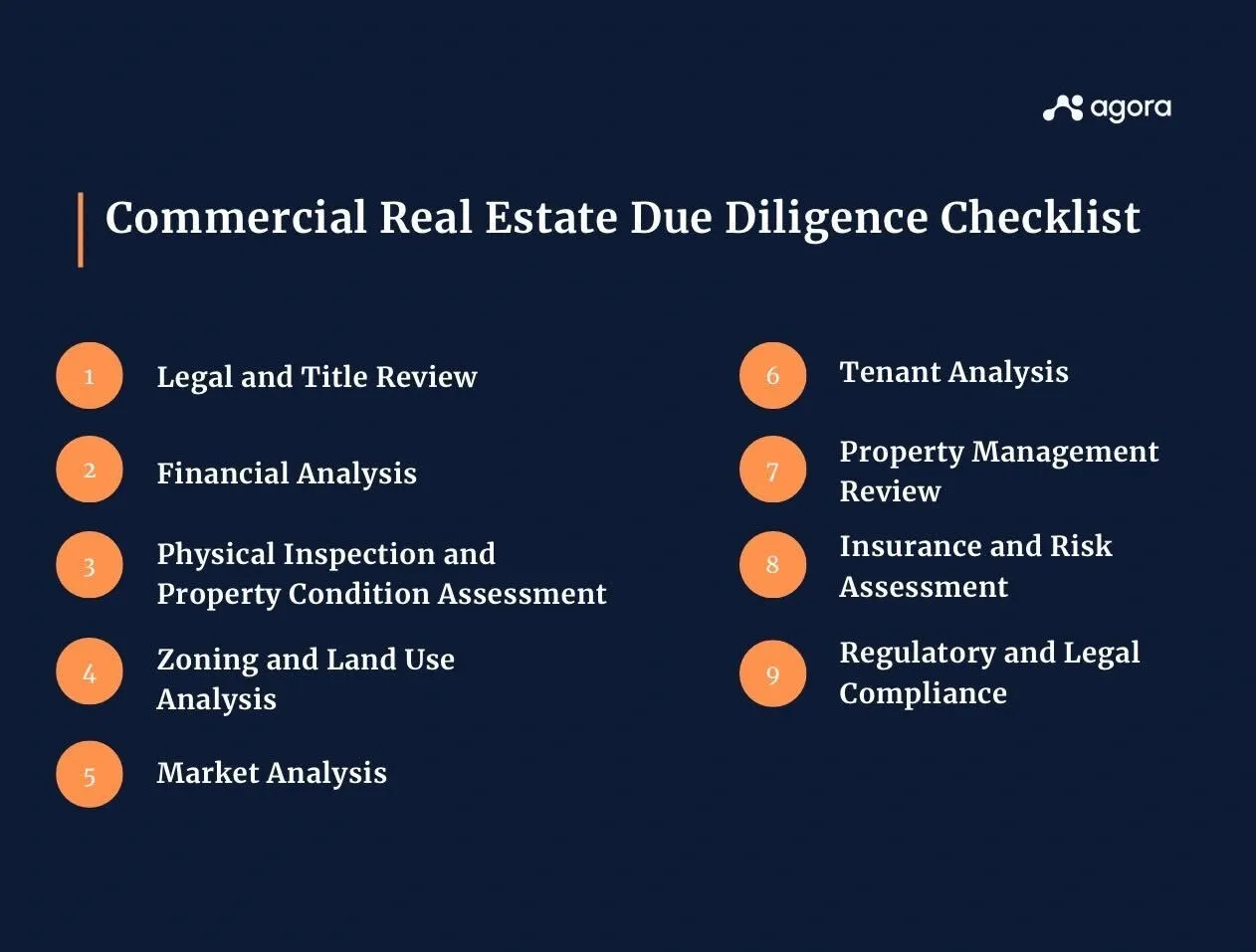
Image Source: Agora
Due diligence failures rank among the most costly mistakes California real estate investors make. This investigation process isn’t simply recommended—it’s mandatory under California real estate law. Many investors rush through this critical step anyway, creating devastating financial consequences that could have been avoided.
What failing due diligence means
Skipping due diligence means proceeding with a real estate purchase without fully investigating all aspects of the property. California’s competitive market requires examining legal, financial, physical, and environmental aspects of a property before finalizing any transaction.
Most investors focus exclusively on location and price while overlooking critical issues that become expensive problems after closing. Failing due diligence happens when you leave stones unturned. You might skip thorough title searches, avoid professional inspections, or overlook zoning restrictions.
Due diligence is not about checking boxes. It empowers you to make informed decisions. Without complete information, you cannot accurately assess whether a property aligns with your investment goals or properly evaluate its true value.
Why due diligence failures cost investors
Inadequate due diligence leads to catastrophic financial consequences. Undiscovered issues become expensive surprises after closing when you have limited options for recourse.
Investors who skip proper investigation face:
Hidden liens and title problems: Unpaid taxes, mortgages, or contractor bills attach to properties without your knowledge, creating substantial liabilities
Zoning violations: Properties might not legally support your intended use, halting development plans or business operations entirely
Environmental hazards: Contaminated soil, asbestos, or underground storage tanks require costly remediation that can exceed the property’s purchase price
Boundary disputes: Property lines might differ from your assumptions, triggering disputes with neighbors or building violations
Problematic lease agreements: Tenant issues, unfavorable lease terms, or uncollected rents will dramatically impact cash flow
Thorough due diligence provides significant negotiating leverage. Structural issues discovered during inspection allow you to request repairs or demand price reductions to cover repair costs.
How to avoid due diligence mistakes
To protect your investment from costly due diligence failures, follow these essential steps:
Include inspection contingencies in your purchase agreement that allow you to cancel without losing your deposit money. This protection gives you the freedom to walk away if serious issues surface during investigation.
Hire qualified professionals rather than attempting to handle everything yourself. An experienced real estate attorney, certified home inspector, and environmental consultant will identify problems you might miss. For environmental concerns, conducting a Phase I Environmental Site Assessment (ESA) is critical—particularly for commercial properties.
Are your due diligence reports current? Phase I ESA reports older than six months are considered outdated under industry standards and won’t provide proper liability protection.
Allow sufficient time for thorough investigation. It typically takes several weeks to properly assess all aspects of a property, though this timeline may extend depending on complexity and any issues discovered. Rushing this process nearly always leads to overlooked problems that become expensive headaches after closing.
The investment in proper due diligence pays for itself by preventing costly surprises that can exceed your property’s purchase price.
Ignoring California Rent Control Laws

Image Source: DoorLoop
Rent control violations represent a growing financial trap for California real estate investors. Since the Tenant Protection Act (AB 1482) became law in 2019, investors who ignore these regulations face severe penalties that will quickly erode investment returns.
What happens if you violate rent control laws? The consequences are swift and expensive.
What California rent control laws require
California’s statewide rent control under AB 1482 establishes clear boundaries that landlords must respect:
Annual rent increases are capped at 5% plus the local Consumer Price Index (CPI) or 10% total—whichever is lower
Landlords can only raise rent twice in any 12-month period
Proper written notice is mandatory—30 days for increases under 10%, and 90 days for increases over 10%
After 12 months of occupancy, tenants can only be evicted with “just cause”
Many cities have enacted stricter local ordinances. Los Angeles Rent Stabilization Ordinance applies to properties built on or before October 1, 1978. Where local rent control laws offer stronger tenant protections than state law, the city ordinance takes precedence if passed before September 2019.
Rent control does not limit initial rent when a unit becomes vacant, but it strictly governs subsequent increases for existing tenants. This creates a complex regulatory landscape where state and local rules frequently overlap.
Why rent control violations are costly
Overlooking rent control requirements will devastate your investment returns through:
Civil penalties that reach thousands of dollars per violation
Tenant lawsuits seeking damages, attorney fees, and rent refunds
Criminal charges in egregious cases
Injunctions that prevent further rent increases
Retroactive rent adjustments dating back to March 2019 in some cases
Courts generally side with tenants when landlords attempt retaliatory actions. Any landlord action within 180 days of a tenant exercising their rights—such as organizing with other tenants or reporting habitability issues—is legally presumed retaliatory.
Even seemingly minor violations like improper notice will trigger major financial consequences. California’s rent control laws directly impact profitability, and these caps can be far below market trends, which means investors lose out on potential gains.
How to stay compliant with rent control
To avoid costly violations, follow these essential compliance practices:
First, determine which laws apply to your property. Check both state regulations and local ordinances, as they often work simultaneously. Properties exempt from AB 1482 include newer constructions (built within the last 15 years), duplexes where the owner occupies one unit, and certain other categories.
Second, maintain meticulous documentation of all notices and communications. Every rent increase must be properly formatted in writing—texts, calls, or emails are legally insufficient.
Third, understand just cause requirements before attempting evictions. Permissible grounds include non-payment, lease violations, or owner move-in, though each category has specific procedural requirements.
Finally, build rent control compliance into your investment analysis. AB 1482 limits rent growth below market rates in high-appreciation areas, so your financial projections should account for these restrictions.
Rent control aims to protect tenants, but proactive investors can still succeed by understanding these laws and incorporating them into their business strategies. Ignoring these regulations almost always leads to costly legal battles that no investor can afford.
Not Using an LLC for Property Ownership
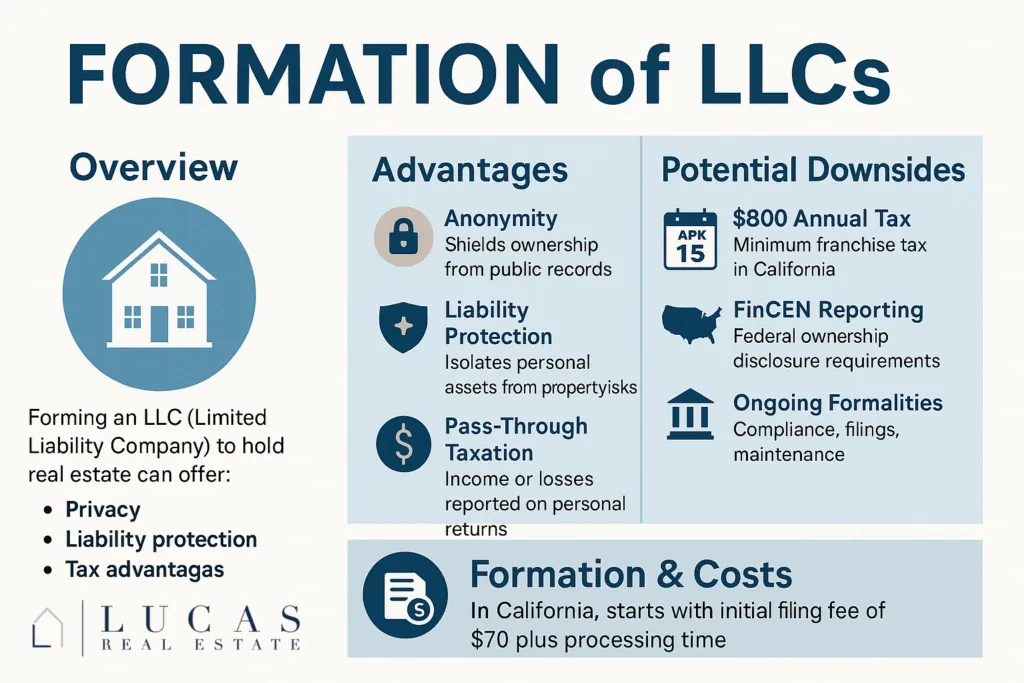
California property investors frequently make the expensive mistake of purchasing real estate in their personal names instead of using a Limited Liability Company (LLC). This choice exposes you to significant financial risks that proper entity structuring prevents.
Before buying your next property, ask yourself: “What protection do I need from potential lawsuits?”
What an LLC does for real estate investors
An LLC creates legal separation between your personal assets and business liabilities. When properly structured, your LLC—not you personally—owns the property, shielding your personal finances from business-related problems.
LLCs provide substantial advantages beyond basic protection:
Tax flexibility – LLCs offer pass-through taxation, avoiding double taxation corporations face
Estate planning benefits – Ownership interests transfer more easily to heirs compared to individual property deeds
Operational simplicity – LLCs require less formality than corporations but provide similar protections
Enhanced credibility – Lenders and business partners prefer dealing with LLCs over individuals
Operating as an LLC keeps your personal name off public property records.
Why personal ownership increases liability
Holding property in your name creates direct exposure to catastrophic financial risks. A tenant slips on your property and sues for negligence. Without an LLC, your personal bank accounts, home, and other assets become targets.
Liability extends beyond tenant issues to include:
Injuries occurring on your property
Contract disputes with vendors or contractors
Environmental contamination claims
Building code violations
Insurance policies frequently cap at $1 million—insufficient for serious injury claims reaching $5 million or more. Personal ownership makes your entire net worth vulnerable to these claims.
How to set up a California LLC for real estate investing
Setting up a California LLC requires these essential steps:
Choose a unique name for your LLC and verify availability through the California Secretary of State database. File Articles of Organization with California authorities and designate a registered agent to accept legal documents on behalf of the LLC.
Draft a detailed LLC Operating Agreement establishing your company’s management rules, member rights, and dissolution procedures. This document should be created specifically for your situation—not downloaded from generic templates.
California requires an $800 annual Franchise Tax for all LLCs regardless of income. Each property should have its own LLC for maximum protection—the “bomb containment unit” principle.
Maintain strict separation between personal and business finances. Courts can “pierce the corporate veil” if you mix personal and business funds, eliminating your liability protection.
Renting Out Unpermitted ADUs
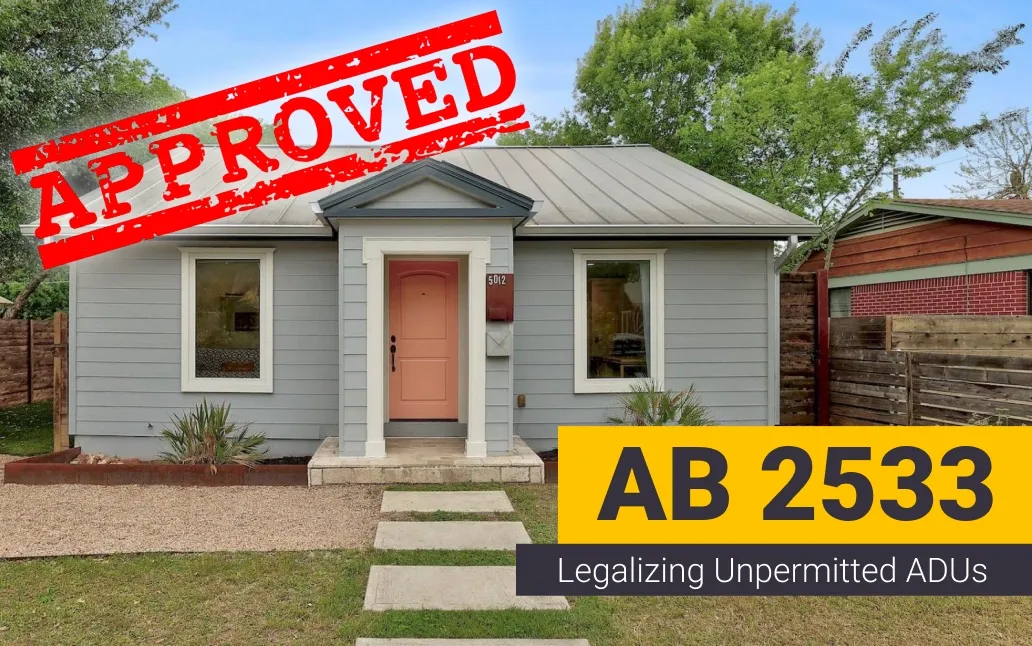
Image Source: Maxable
Thousands of California property owners rent out unpermitted Accessory Dwelling Units without understanding the massive financial exposure this creates. These unauthorized living spaces—converted garages, basement apartments, or backyard cottages—represent one of the most dangerous legal landmines in real estate investing.
What happens when a disgruntled tenant discovers your ADU lacks proper permits?
What qualifies as an illegal ADU
Unpermitted ADUs include any secondary dwelling unit built without proper building permits or local authority approval. These units typically lack required safety features, proper utility connections, or building code compliance. Common examples include garage conversions, basement apartments, or detached structures never registered with local jurisdictions.
Many spaces appear perfectly habitable yet remain illegal because they weren’t constructed through formal procedures. The legal definition covers secondary homes that don’t comply with local or state housing, zoning, or building codes. Even pristine units remain illegal without a Certificate of Occupancy.
Why unpermitted units create massive liability
Renting unpermitted ADUs exposes property owners to devastating financial consequences:
Tenants can sue to recover all rent previously paid during their tenancy
Cities may require tenant eviction plus payment of up to $25,000 in relocation assistance
Property owners face orders to restore properties to original condition
Home insurance won’t cover damages in unpermitted units
Disgruntled tenants can sue for breach of contract, wrongful eviction, retaliation, and fraud. One expert warns: “When renting out an unpermitted unit, everything that is going well is great, but when it becomes bad—it is awful”.
How to legalize existing unpermitted ADUs
California created programs to help property owners legalize existing unpermitted ADUs. Assembly Bill 2533, effective January 2025, establishes a pathway for legalizing units built before January 1, 2020. Local agencies cannot deny permits for unpermitted ADUs constructed before this date unless they present serious health or safety risks.
To legalize an existing unpermitted ADU:
Submit a building permit application with documentation showing construction before January 1, 2020
Pay application review fees (many retroactive impact and connection fees are waived)
Schedule inspection to confirm basic habitability standards
Complete necessary safety corrections if required
Receive final approval and permits
Legalizing unpermitted units offers substantial benefits: increased property value (potentially exceeding $100,000), reduced legal liability, proper insurance coverage, and legal rent collection rights. The process eliminates constant risk of code enforcement actions.
Consult with a real estate attorney specializing in California property law before attempting ADU legalization or rental. This proactive approach helps address complex requirements while minimizing legal complications.
Failing to Disclose Material Facts During Sale

Proper disclosure forms the foundation of California real estate transactions. Failing to reveal property defects will turn profitable deals into financial disasters overnight. California’s strict disclosure laws require complete transparency to avoid costly litigation that can destroy investment returns.
What California real estate disclosure laws require
California enforces strict disclosure requirements for residential property sales. Sellers must complete a Transfer Disclosure Statement (TDS) detailing the property’s condition and known defects. This form covers structural issues, neighborhood nuisances, and everything in between—and must be provided to buyers before transferring title.
Sellers must also complete:
Natural Hazard Disclosure Statement (revealing flood zones, earthquake faults, fire risks)
Lead-Based Paint Disclosure (for homes built before 1978)
Notice of Supplemental Property Tax Bill
Mello-Roos Community Facilities Act Disclosure
“As-is” sales do not excuse sellers from disclosure obligations. Even after making repairs, previously known issues must still be disclosed. California law requires sellers to reveal all material facts affecting a property’s value or desirability—even issues not explicitly requested in disclosure forms.
Why nondisclosure leads to lawsuits
Failing to disclose material defects creates serious financial exposure. Buyers discovering undisclosed issues can pursue several remedies:
Buyers may rescind the purchase agreement, terminating the sale entirely. They can also sue for damages, including repair costs, decreased property value, and legal fees. Courts may award punitive damages in cases of intentional concealment.
Material facts requiring disclosure include structural damage, water intrusion, and mold problems. Less obvious matters like neighborhood nuisances, deaths on the property within three years, and property reputation may also require disclosure.
California courts consistently side with buyers in disclosure disputes. “Failing to provide required disclosures can have serious consequences, including legal action, contract termination, and financial penalties”.
How to properly disclose property issues
To avoid disclosure-related lawsuits, focus on thoroughness and timing. Northern California customarily provides disclosures before receiving offers, while Southern California typically provides them after contract acceptance. Disclose early whenever possible—this reduces the likelihood of buyers canceling later.
Complete all forms accurately and thoroughly. When uncertain about whether to disclose something, err on the side of disclosure. You’re only required to disclose known issues—there’s no obligation to search for unknown defects or hire inspections.
Working with experienced real estate attorneys helps you understand disclosure requirements. They can advise on specific disclosures needed for your property type and help draft additional disclosures for unique situations.
Not Having a Written Joint Venture Agreement

Image Source: eForms
Joint ventures often begin with handshake agreements and verbal promises between real estate investors. This creates a foundation for future legal troubles. Verbal agreements might seem convenient at first, yet they lead to expensive disputes that written contracts prevent.
What a California Real Estate Joint Venture Agreement Includes
A proper joint venture agreement serves as your roadmap detailing each party’s rights, responsibilities, and financial stakes. California joint venture agreements should include:
Party information – Names, addresses, and contact details of all participating members
Purpose statement – Clear definition of the joint venture’s objectives and timeline
Contribution details – Specific capital, assets, labor, and expertise each party brings
Profit and loss allocation – How financial returns and liabilities will be distributed
Governance structure – Decision-making processes for both daily operations and major decisions
Property protection – Rules for handling intellectual property and proprietary information
The agreement must specify timelines, renewal terms, and dissolution procedures to avoid future confusion.
Why Handshake Deals Fail in Real Estate
Verbal agreements in real estate joint ventures collapse into legal disputes for predictable reasons. Without written documentation, parties remember terms differently, making it impossible to verify specifics when disagreements arise.
California’s statute of limitations gives parties only two years to sue for breach of verbal contracts compared to four years for written agreements.
What happens when the partnership goes bad?
Real estate context makes verbal agreements potentially unenforceable under California’s Statute of Frauds. Even honest partners might find themselves with no legal recourse if the relationship deteriorates.
How to Draft a Proper Joint Venture Agreement
To create a legally sound joint venture agreement in California, follow these steps:
Clearly define the purpose and duration of your partnership
Detail each party’s exact contributions and ownership percentages
Establish profit-sharing and expense allocation formulas
Create a governance framework outlining voting rights and management responsibilities
Include dispute resolution procedures specifying mediation, arbitration, or litigation
Working with an experienced California real estate attorney is essential when drafting joint venture agreements. This investment prevents the costly disputes that arise from verbal agreements or poorly drafted contracts.
Underestimating Property Expenses and ROI
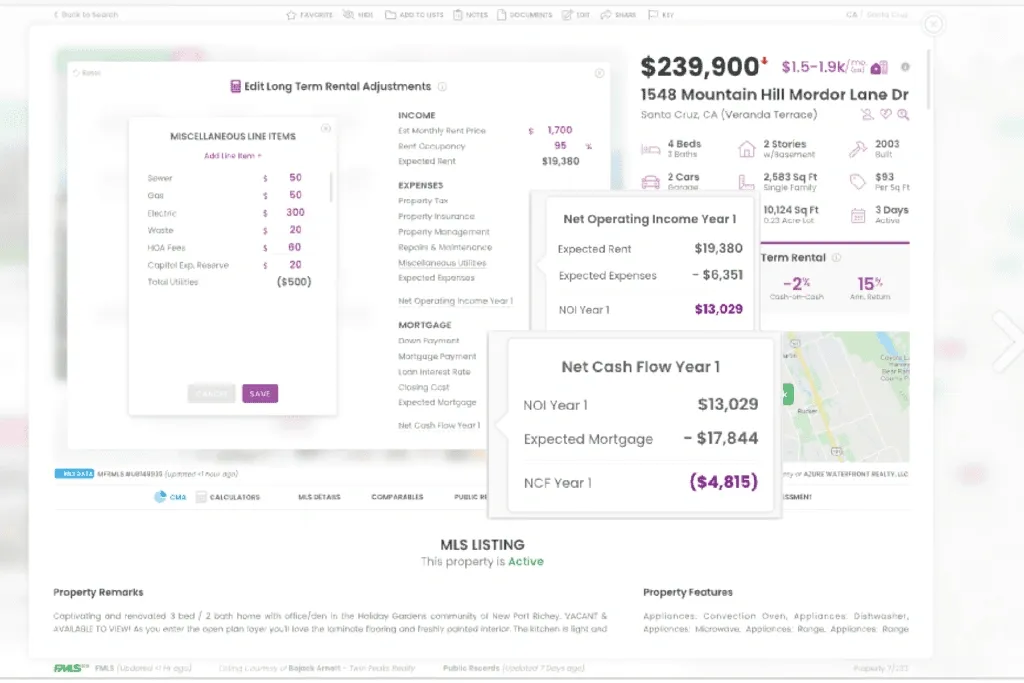
Image Source: Privy Pro
Accurate financial projections determine whether your California real estate investment succeeds or fails. Many investors suffer devastating financial losses by underestimating the true cost of property ownership and operation.
What costs investors consistently miss
California investors repeatedly overlook critical expenses that destroy profitability. Insurance premiums have risen dramatically—now averaging about 3% of property value annually with projected increases of 2-3% yearly in the coming decade. This represents a substantial jump from historical rates of 0.5-1%.
The “50% Rule” provides a reality check that most investors ignore—approximately half of your rental property’s revenue will go toward operating expenses in the long term. These hidden costs typically include:
Property taxes (potentially increasing upon ownership change)
Regular maintenance and unexpected repairs
Vacancies and tenant turnover expenses
Property management fees (8-12% of monthly rental income)
Utilities and common area upkeep
HOA fees where applicable
Areas prone to natural disasters like California’s wildfire zones face insurance costs that have skyrocketed, often making previously profitable investments questionable.
Why ROI miscalculations destroy long-term profits
Inaccurate return calculations create a dangerous gap between expectations and reality. Most investors focus exclusively on purchase price and potential rent while ignoring how expenses erode actual profits.
What does actual ROI really mean? To realize actual ROI in cash profits, you must eventually sell the property—often at less than market value after deducting selling costs like repairs, commissions, and mortgage payoff. These transaction expenses frequently reduce returns by 5-10%.
Different calculation methods produce vastly different results. Using the wrong formula for your investment type leads to poor decision-making. Comparing a property’s NOI against the mortgage balance yields different figures than measuring against total acquisition costs.
How to project realistic investment returns
To avoid costly miscalculations, use conservative estimates that account for California-specific challenges like rent control limitations and natural disaster risks.
Evaluate properties using multiple metrics like the 1% Rule (monthly rent should equal at least 1% of purchase price) while understanding its limitations. Factor in neighborhood-specific considerations such as safety, job opportunities, school quality, and amenities.
Build detailed financial models incorporating all expenses—both obvious and hidden—alongside realistic appreciation projections based on local market data. This approach helps prevent the costly miscalculations that repeatedly destroy California real estate investments.
Improperly Handling Tenant Evictions or Relocations
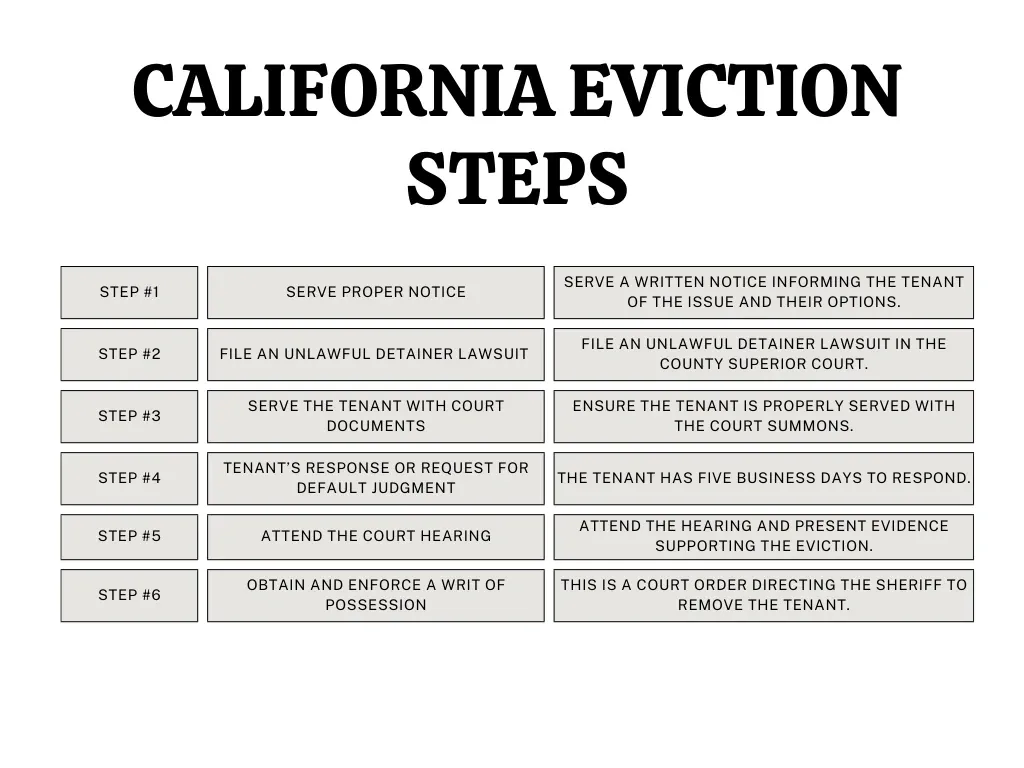
Image Source: House Buyer of America
Eviction mistakes expose California landlords to serious legal consequences that multiply investment losses rapidly. California’s strict tenant protection laws make proper eviction procedures mandatory for every real estate investor.
What California Eviction Laws Require
California law prohibits “self-help” evictions where landlords change locks, remove belongings, or shut off utilities. Landlords must follow a specific legal process:
Serve proper written notice (3-day notice for nonpayment, 30 or 60-day notice for no-fault terminations)
File an unlawful detainer lawsuit if the tenant doesn’t comply
Obtain a court judgment and writ of possession before removing any tenant
Allow law enforcement to execute the actual eviction
Starting January 2025, tenants now have 10 days (increased from 5) to respond to eviction notices. This extended timeline gives tenants additional opportunity to contest evictions.
Why Improper Evictions Lead to Penalties
Illegal evictions carry severe consequences for landlords:
Tenants can sue for $100 per day of violation ($250 minimum) plus actual damages, reasonable attorney fees, and court costs. Penalties may include triple the monthly rent or $5,000, whichever is higher.
Landlords may face misdemeanor criminal charges including potential jail time of up to six months. Courts consistently side with tenants in these disputes, making proper procedure essential.
How to Use Legal Strategies Like Cash-for-Keys
Cash-for-Keys offers a legal alternative to formal eviction proceedings. This arrangement involves paying tenants to voluntarily vacate by a specific date.
Any Cash-for-Keys agreement should include:
Written documentation with clear terms
Specific move-out date
Property condition requirements
Payment amount and timing (cash is recommended)
Before implementing Cash-for-Keys, verify you’re negotiating with the actual tenant and provide the agreement in writing. Tenants can typically rescind these agreements within 30 days.
Not Hiring a Real Estate Attorney
Skipping legal representation ranks among the most expensive shortcuts California real estate investors take. Legal expertise provides essential protection that do-it-yourself approaches cannot match.
What a California real estate attorney does
Real estate attorneys function as critical partners throughout property transactions:
Reviewing purchase agreements, lease contracts, and disclosure forms for compliance issues
Identifying legal risks including zoning restrictions and environmental hazards before they become problems
Conducting title searches to verify clear ownership and uncover hidden liens
Handling closings to ensure proper document execution and recording
Representing your interests in disputes through negotiation or litigation
Why DIY legal work creates problems
Attempting to handle legal matters without professional guidance exposes investors to significant risks.
DIY templates frequently fail to address California’s specific legal requirements. Generic forms often contain inadequate language or missing provisions that leave your interests unprotected. Without proper legal training, you will struggle to identify potential issues before they escalate into costly problems.
A Los Angeles couple learned this lesson after purchasing a duplex without attorney review — they later discovered part of their structure encroached onto neighboring property, triggering expensive litigation.
Should you risk your investment on a template downloaded from the internet?
How to select the right real estate attorney
When choosing legal counsel, focus on these essential qualifications:
California experience with state real estate laws and local regulations
Practice focus in your specific transaction type
Communication approach that matches how you prefer to work
Clear fee structure — expect to pay $150-$500 per hour depending on case complexity
Check the attorney’s reputation through client testimonials and professional reviews. The right legal counsel will save you far more than their fees cost by preventing expensive mistakes before they occur.
Legal Compliance Reference Guide
Mistake | Core Legal Risk | Financial Exposure | Compliance Requirements | Protection Strategy |
Inadequate Due Diligence | Hidden liens, environmental hazards, zoning violations | Costs can exceed purchase price | Thorough investigation of legal, financial, physical, environmental factors | Hire qualified professionals, include inspection contingencies, allow adequate time for review |
Rent Control Law Violations | AB 1482 and local ordinance violations | Civil penalties, tenant lawsuits, attorney fees, rent refunds | 5% + CPI or 10% annual cap, just cause evictions after 12 months | Verify state and local regulations, document all notices, provide proper written notice |
Personal Property Ownership | Direct personal liability exposure | Unlimited personal asset exposure | $800 annual California Franchise Tax, proper entity formation | Create separate LLCs per property, maintain business/personal finance separation |
Unpermitted ADU Rentals | Illegal units without proper permits | Complete rent refunds, up to $25,000 relocation costs | Certificate of Occupancy, building code compliance | Use AB 2533 legalization pathway, obtain required permits and inspections |
Disclosure Law Violations | Concealed property defects | Sale rescission, repair costs, punitive damages, legal fees | Transfer Disclosure Statement, Natural Hazard Disclosure completion | Disclose early and thoroughly, document all known defects |
Verbal Joint Venture Agreements | Disputed partnership terms | Limited legal recourse, litigation expenses | Written documentation of contributions, profit sharing, governance | Hire attorney for agreement drafting, include dispute resolution clauses |
Expense Projection Errors | Underestimated operating costs | Operating expenses consume 50% of rental revenue | Account for insurance, taxes, maintenance, vacancy costs | Apply conservative estimates, use multiple analysis metrics |
Improper Eviction Procedures | Illegal self-help evictions | $100 daily penalties, $5,000 maximum, criminal charges | Legal notice requirements, court judgment process | Follow proper legal procedures, consider Cash-for-Keys alternatives |
No Legal Representation | DIY legal errors | Litigation costs, invalid contracts | Professional document review and legal guidance | Select experienced local attorney with transparent fee structure |
Conclusion
California real estate law compliance requires meticulous attention to detail and qualified legal guidance. Each of the nine mistakes outlined above can drain investment profits or trigger catastrophic financial losses. These errors occur regularly among both new and experienced investors — making proper preparation essential.
The financial stakes make no room for error. A single due diligence oversight might saddle you with environmental cleanup costs exceeding your property’s purchase price. Rent control violations can trigger penalties, lawsuits, and substantial tenant payouts that destroy returns.
Protecting your personal assets through proper LLC structuring is essential while ensuring all rental units meet legal requirements. Proper disclosure during sales prevents costly litigation. Written joint venture agreements protect your investments when working with partners. Realistic expense projections help avoid negative cash flow situations that force distressed sales.
Following proper eviction procedures protects you from penalties that can reach thousands of dollars per day. Working with qualified real estate attorneys offers the strongest protection against these common and devastating legal landmines.
The difference between profit and loss often comes down to legal compliance. Smart investors recognize these potential pitfalls before committing capital. They build strong professional teams, conduct thorough research, and follow proper procedures throughout their investment journey.
California’s real estate laws change frequently. What worked last year might violate regulations today. Staying informed about legal updates remains essential for continued investment success.
What is your goal? — the same question that guides proper eviction strategy applies to your entire investment approach. If your goal is long-term wealth building, you must prioritize legal compliance over shortcuts. With proper representation, investors can avoid these legal landmines that repeatedly destroy investment returns.
Understanding these pitfalls now will save you substantial headaches and protect your investment capital down the road.
FAQs
Q1. What are some key real estate law mistakes to avoid in California? Some critical mistakes include failing to conduct proper due diligence, ignoring rent control laws, not using an LLC for property ownership, renting out unpermitted ADUs, and failing to disclose material facts during a sale. These errors can lead to significant financial losses and legal issues for investors.
Q2. How can investors protect themselves when purchasing California real estate? Investors can protect themselves by conducting thorough due diligence, using LLCs for property ownership, ensuring all units are properly permitted, complying with rent control laws, and working with experienced real estate attorneys. It’s also crucial to maintain proper documentation and disclose all known issues when selling property.
Q3. What are the risks of not using an LLC for property ownership in California? Not using an LLC exposes investors to personal liability for property-related issues. This means your personal assets could be at risk in case of lawsuits or other legal problems. LLCs provide a layer of protection by separating your personal finances from your business liabilities.
Q4. How does California’s rent control law affect real estate investors? California’s rent control law (AB 1482) caps annual rent increases and requires just cause for evictions after 12 months of tenancy. Ignoring these regulations can result in civil penalties, tenant lawsuits, and potential rent refunds. Investors need to understand both state and local rent control ordinances to ensure compliance.
Q5. Why is it important to hire a real estate attorney in California? Hiring a real estate attorney is crucial because they can review essential documents, identify potential legal risks, conduct thorough title searches, and handle closings properly. They also provide valuable expertise in navigating California’s complex real estate laws, potentially saving investors from costly mistakes and litigation.
Speak With a California Real Estate Attorney
Every one of the nine exposures above is avoidable when counsel is involved before the transaction closes rather than after a claim is filed. Borna Houman Law represents property owners, landlords, and investors across Los Angeles County on acquisitions, entity structure, leasing, disclosure obligations, and tenancy terminations. A document review measured in hours is consistently cheaper than the litigation it prevents.
Call (888) 42-BORNA or request a confidential consultation.
This article is general information, not legal advice. Consult an attorney about your specific situation.

