
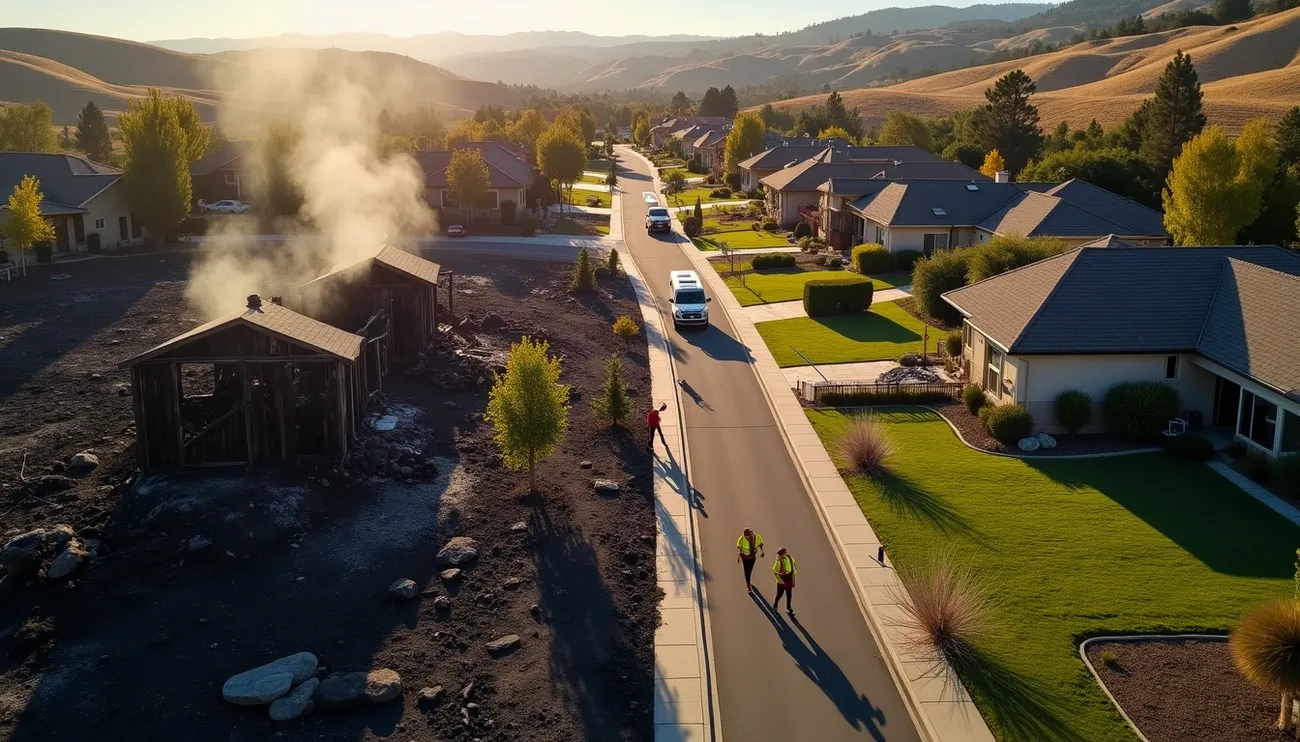
California’s devastating January 2025 firestorm has made wildfire subrogation claims a critical issue for thousands of property owners. The Palisades and Eaton Fires combined to burn over 37,000 acres in Los Angeles County, destroying more than 16,000 structures in a matter of days. With total insured losses estimated to exceed $45 billion, these blazes have become some of the costliest in state history.
Subrogation claims give insurance companies a legal right to act on your behalf after paying your claim. Your insurer can recover costs from parties responsible for the damage—such as utility companies or negligent actors—through this process. Understanding subrogation fire claims plays a vital role in determining your final recovery amount, especially given the ongoing investigations into utility equipment failures in the Eaton Canyon area and the rapid spread of the Palisades blaze.
This piece breaks down essential information about wildfire subrogation claims. You’ll learn how the process works, your rights as a policyholder, and why insurance companies are aggressively pursuing these claims to recover the billions paid out in Palisades and Eaton Fire damages. The information will help you understand wildfire insurance complexities, whether you are rebuilding from the recent devastation or protecting your assets for the future.
Understanding Subrogation in Wildfire Claims
Your property has been damaged by a devastating wildfire, and the insurance claim process isn’t as simple as you might think. Your insurer pays for the damages and starts their own legal experience. This process, called subrogation, is a vital part of how wildfire claims end up getting resolved.
What is claims subrogation?
Subrogation gives insurance companies the legal right to “step into your shoes” after they’ve paid your claim. Your insurer gets the right to chase after the responsible party to get their money back once they’ve compensated you for losses caused by someone else.
Here’s a real-world example: Your home gets damaged by a wildfire caused by a utility company’s faulty equipment. Your insurance pays your claim first. Your insurer can then seek money from the utility company that caused the damage through subrogation.
This legal mechanism works in several ways:
- The party who caused the damage will bear the financial responsibility
- You get paid quickly without waiting for lawsuits to finish
- Insurance premiums stay more stable over time
The subrogation process starts after your claim gets paid. Your insurance company collects evidence, figures out who’s at fault, and might bring in legal teams if they need to take formal action.
How subrogation works in fire insurance
Fire insurance has specific rules. Insurance companies get the right to go after any third party responsible for starting that fire once they’ve paid for the damages. Your personal claim becomes your insurer’s legal battle.
Your insurance company might go after parties like:
- Utility companies with faulty equipment
- Contractors who broke safety rules
- Landowners who didn’t maintain their property
- Manufacturers of defective products that started the fire
The insurer needs to prove someone was liable by showing negligence, broken regulations, or equipment failures that led to the fire. They need lots of evidence and expert testimony to build a strong case.
The subrogation process takes significant resources. Insurance carriers often bring in specialized recovery experts who know how to spot opportunities and get the best results.
Why subrogation matters in wildfire cases
Subrogation in wildfire cases goes beyond protecting insurers’ money. This time-honored legal doctrine makes sure those responsible for causing damage pay for their actions.
We pushed for accountability by making negligent parties pay for the harm they cause – not innocent policyholders or their insurers. This accountability has changed how utility companies work in fire-prone areas. Many utilities have upgraded their systems and changed policies to fix conditions that started fires in the past.
Subrogation helps keep insurance available and affordable in wildfire-prone areas. Insurance companies might have to raise premiums or leave high-risk markets without it.
In stark comparison to this common belief, insurers can recover losses from events people call “acts of God” if they can prove a third party’s actions or negligence played a part. This makes subrogation especially important in California. The state’s inverse condemnation doctrine holds utility companies liable for wildfire damage from their equipment, even without proving negligence.
Homeowners should know that their insurer’s recovery efforts might help them through stable premiums and continued coverage in high-risk areas.
Insurance Policy Language and Coverage Limits
You need to know what your insurance policy says before a wildfire hits. Your insurance documents’ fine print tells you what’s covered, what’s not, and how much money you’ll get during a crisis.
Dwelling and property coverage explained
Your homeowner’s policy has several types of coverage that protect different parts of your property during a wildfire. Dwelling coverage is the foundation of your policy. It protects your home’s structure—the walls, roof, plumbing, and attached structures like garages or decks. This helps pay to repair or rebuild your home if fire damages or destroys it.
Most policies also protect:
- Other structures coverage for detached buildings like sheds, gazebos, fences, and barns
- Personal property coverage for belongings such as furniture, electronics, clothing, and household items
- Landscaping coverage which might help protect plants, trees, and outdoor features
The type of reimbursement makes a big difference. Actual cash value (ACV) policies only give you the depreciated value of what you lost. Replacement cost value (RCV) policies pay to replace items with equal quality ones without depreciation. This difference can determine whether homeowners in wildfire-prone areas fully recover or face big out-of-pocket costs.
Standard coverage limits don’t usually go up over time. This creates a risk of underinsurance as replacement costs increase. Some insurers solve this by offering extended replacement cost coverage—an add-on that gives you extra coverage if rebuilding costs more than your policy limit.
Common exclusions in wildfire-prone areas
Insurance policies often have specific exclusions that can affect wildfire claims. Earth movement exclusions cause the most problems—even when the wildfire caused the soil to move. A good example is foundation damage from thousands of gallons of firefighting water. Insurance might deny this claim under earth movement exclusions.
Other common exclusions are:
- Limits on high-value personal property like jewelry, art, and collectibles
- Damage from poor maintenance or pre-existing hazards
- Limited smoke-damage coverage for homes not directly touched by flames
- Weather conditions that combine with other causes
Anti-concurrent causation provisions can be especially difficult. Insurers use these to deny coverage when at least one cause isn’t covered. This creates problems for wildfire victims when multiple factors cause damage—like fires that lead to mudslides or water damage.
Loss of use and personal liability clauses
Loss of use coverage (or Additional Living Expenses/ALE) helps when wildfires make your home unlivable. It pays for temporary housing, extra food costs, and other expenses while you’re away from home.
This coverage has important limits. Most policies cap it at 20-30% of your home’s insured value. If your home is insured for $500,000, you could get between $100,000 and $150,000 for extra living expenses. Time limits usually run 12 to 24 months, no matter how long rebuilding takes.
ALE has specific boundaries. It covers hotel bills and increased living costs but won’t pay your mortgage. You only get reimbursed for extra expenses—the difference between normal costs and your temporary living expenses.
Personal liability coverage protects you if others claim property damage or injury after a fire. This becomes vital if a wildfire starting on your property spreads to neighboring homes, as you could be legally responsible for their damage.
Legal Rights and Subrogation Process for Insurers
Insurance companies get powerful legal rights to recover their costs after paying wildfire damage claims. These rights are the foundations of subrogation wildfire claims – a vital process that benefits both insurance companies and policyholders.
Subrogation rights under California law
California’s legal foundation for wildfire subrogation has existed for many years. State law automatically gives insurers the right to seek reimbursement from responsible parties after paying for losses caused by third parties.
Wildfire subrogation claims thrive under California’s unique approach to utility liability. The state constitution’s “Takings Clause” requires just compensation when public use (like electricity transmission) damages private property. This legal principle called inverse condemnation works effectively in wildfire cases.
Inverse condemnation makes recovery easier than standard negligence claims because it doesn’t need proof of wrongdoing. Insurance companies can recover costs from utility companies whose equipment started fires, whatever their negligence level. They can also recover pre-judgment interest and attorneys’ fees under inverse condemnation.
New laws have changed how companies handle subrogation fire claims. Insurance companies must now let utility companies buy subrogation claims before selling them to third parties like hedge funds. This first refusal right helps lower additional costs on the Wildfire Fund.
Equitable vs. contractual subrogation
Insurance law recognizes two types of subrogation rights:
- Contractual subrogation comes straight from policy language that gives the insurer recovery rights
- Equitable subrogation stems from common law principles of fairness
This difference matters a lot. Courts usually rule that “the contract terms control, rather than common law or equitable principles” when subrogation rights come from contract language. Insurance companies with clear contractual subrogation clauses often have better recovery positions.
Contractual subrogation lets insurance companies subrogate for additional named insureds who didn’t receive direct loss payments. This broader right allows more complete recovery actions.
How insurers step into the shoes of the insured
Subrogation’s legal concept puts the insurer in the same legal position as the insured against third parties. California case law states that subrogation “places the insurer in the ‘shoes of the insured’ as to the insured’s claims against third parties”.
Insurance companies get all their policyholder’s rights to pursue responsible parties after paying a claim. They can file lawsuits, hire experts, and gather evidence to prove liability.
Insurance companies move quickly to break down causes and save evidence in wildfire cases. They often cooperate with other insurers and share costs by hiring fire origin experts and attorneys together to build stronger cases.
These shared efforts have helped insurers hold utility companies accountable and forced them to “upgrade their systems and change their policies” to reduce fire risks.
Investigation and Evidence Collection
Evidence makes or breaks a subrogation wildfire claim. Insurance companies cannot recover funds paid to policyholders without proper investigation. This directly affects premium costs.
Identifying the cause of the wildfire
Wildfire origin investigations use specialized techniques that differ completely from structure fire investigations. Wildland fire investigators start their work at the most damaged areas and work backward to less damaged sections. They follow fire progression indicators to find the general origin area and narrow it down to a specific spot, usually no bigger than five feet by five feet.
Time matters because evidence disappears faster. The team analyzes burn patterns, talks to witnesses, and documents everything at the scene. A social-first approach helps too – photos and videos from platforms often provide key evidence. Both the images and their metadata help create accurate timelines.
Preserving evidence and joint inspections
Teams must start preserving evidence while the fire still burns. We focused on preventing utility companies from accidentally destroying critical evidence when they restore power by removing or replacing damaged equipment. The core team sends notice and preservation letters to potential responsible parties right away. Sometimes security personnel guard the origin area.
Joint inspections let all identified parties get into the scene together. Teams tag physical evidence and send it to forensic experts for lab testing. These pieces are the foundations of any successful subrogation claim.
Consulting experts: engineers and fire analysts
A strong wildfire investigation needs several specialists working together:
- Wildland fire origin-and-cause experts
- Electrical engineers to check power equipment
- Fire behavior and spread analysts
- Metallurgists to study failed components
- Arborists to address vegetation management issues
These experts rebuild the ignition sequence and prove causation. They use aerial drone surveys, photogrammetric analysis, and satellite data to map how the fire spread.
Role of CPUC and utility regulations
The California Public Utilities Commission (CPUC) is a vital part of wildfire investigations with utility equipment. Their Safety and Enforcement Division looks into incidents to see if utilities broke regulations. While CPUC staff don’t determine what caused the fire, their findings about regulatory violations strengthen subrogation claims.
Utilities must report fires that involve their equipment when specific criteria are met. These investigations might lead to enforcement actions if they find violations, which gives valuable evidence for subrogation claims.
Litigation and Recovery Challenges
Legal teams face many hurdles when they pursue litigation for wildfire subrogation claims. Insurers, attorneys, and defendants must navigate these challenges carefully.
Filing lawsuits against utilities and municipalities
Insurers must identify all potentially responsible parties before suing utilities or government entities for wildfire damages. Companies like PG&E and Southern California Edison have dealt with billions in subrogation claims. The rules differ for municipalities. California law requires written notice submission within 6 months of finding the injury before filing suit against a government actor. Claims against federal entities fall under the Federal Tort Claims Act with a 2-year statute of limitations.
Statutes of limitations and tort claim prerequisites
California fire insurance policies give at least 12 months from the “inception of the loss” to file a suit. This period doubles to 24 months during a State of Emergency. The timeline starts at the loss inception but becomes “equitably tolled” after claim submission. The toll stops when the insurer “unequivocally” denies the claim. The law requires insurers to notify policyholders about applicable statutes at least 60 days ahead.
Common causes of action: negligence, nuisance, inverse condemnation
Key legal theories in wildfire litigation include:
- Negligence: The utility failed in its duty of care
- Nuisance: Claims for unwanted interference with property
- Inverse condemnation: Utilities face strict liability without proof of negligence
California law makes inverse condemnation especially effective since electrical utilities operate as quasi-governmental entities. This approach doesn’t need proof of negligence. Plaintiffs can recover both pre-judgment interest and attorneys’ fees under this theory.
Subrogation wildfire trust and hedge fund involvement
Settlement trusts often emerge after major wildfires. PG&E’s Chapter 11 bankruptcy led to an $11 billion qualified settlement fund to compensate insurance carriers for wildfire-related claims. Hedge funds used to buy subrogation claims from insurers at discounted rates. Recent California laws now give utilities the first right to settle before insurers can sell claims to third parties.
How to fight a subrogation claim as a defendant
Defendants have several options to challenge subrogation:
- They can dispute causation by pointing to natural causes or extreme weather conditions
- They can assert comparative negligence to reduce liability
- They can use government immunity where applicable
- They can challenge evidence preservation or chain of custody issues
Conclusion
Wildfire subrogation claims play a key role in the insurance ecosystem, especially when you live in high-risk areas like California. Learning about this process shows you what happens after your insurance company pays your claims.
Insurance companies don’t just write off the costs of wildfire damages. They work hard to get money back from responsible parties through legal channels. This approach ended up helping you with stable premiums and continued insurance coverage in fire-prone areas.
Subrogation is complex and needs deep investigation, evidence collection, and often legal action against utilities or other entities. Fire origin experts, engineers, and legal teams work together to build strong cases that make negligent parties pay for damages.
Your policy’s language affects your coverage and recovery options a lot. You can save thousands after a disaster by knowing the difference between replacement cost and actual cash value policies. It also helps to know about exclusions and limitations before disaster strikes.
California’s unique legal framework, especially inverse condemnation, gives insurers strong tools to pursue wildfire subrogation. These legal tools have made utilities improve their safety practices, which could lower future wildfire risks for everyone.
Homeowners should therefore:
- Review policies carefully, particularly coverage limits and exclusions
- Document property thoroughly before any loss occurs
- Understand how subrogation might affect their claim
- Stay informed about settlement trusts after major wildfires
Wildfires are becoming more frequent and severe, making subrogation more crucial than ever. This legal process helps maintain the insurance safety net that protects homeowners when they need it most. Knowing about subrogation gives you the ability to handle the aftermath of wildfire disasters with confidence and clarity.
FAQs
Q1. What is subrogation in wildfire insurance claims? Subrogation is a legal process that allows insurance companies to recover costs from responsible parties after paying out claims to policyholders for wildfire damages. It enables insurers to “step into the shoes” of the insured and pursue compensation from those who caused the fire.
Q2. How does subrogation affect homeowners after a wildfire claim? While homeowners receive their claim payout immediately, subrogation can benefit them in the long run by helping to keep insurance premiums stable and ensuring continued coverage availability in high-risk areas. It also holds negligent parties accountable for damages they cause.
Q3. What types of damages are typically covered in wildfire insurance policies? Most policies cover damage to the home’s structure, personal belongings, and other structures on the property. They may also include coverage for temporary living expenses if the home becomes uninhabitable. However, coverage limits and exclusions vary, so it’s important to review your policy carefully.
Q4. How long do insurance companies have to file a subrogation claim after a wildfire? In California, insurers generally have at least 12 months from the “inception of the loss” to file a subrogation claim. This period can be extended to 24 months during a State of Emergency. The timeline may be “equitably tolled” once a claim is submitted until the insurer makes a decision.
Q5. Can insurance companies recover costs even if the wildfire was considered an “act of God”? Yes, insurers can often pursue subrogation even for events labeled as “acts of God” if evidence shows a third party’s actions or negligence contributed to the damage. In California, the inverse condemnation doctrine allows recovery from utility companies for wildfire damage caused by their equipment, even without proving negligence.

