
Hidden Airbnb Laws Los Angeles Hosts Must Know in 2025: Official Guide
 Los Angeles’s Airbnb laws have altered the map of short-term rentals. The city saw listings plummet by 78% between 2019 and 2022 after new regulations took effect. The current situation looks grim – almost half of LA’s Airbnb listings don’t follow these laws, which puts hosts at risk of substantial fines. Los Angeles currently has 13,815 Airbnb listings, but only half have obtained proper short-term rental licenses.
This piece will help you direct through LA’s short-term rental complexities. The city’s planning department requires hosts to register their properties. The Regular Home-Sharing application fee increased to $192. Hosts must also pay a 14% Transient Occupancy Tax (TOT) for any bookings that last 30 days or less. You’ll learn about permit regulations, tax requirements, safety standards, and potential risks that LA’s Airbnb hosts must understand to operate legally.
What Makes a Short-Term Rental Legal in Los Angeles
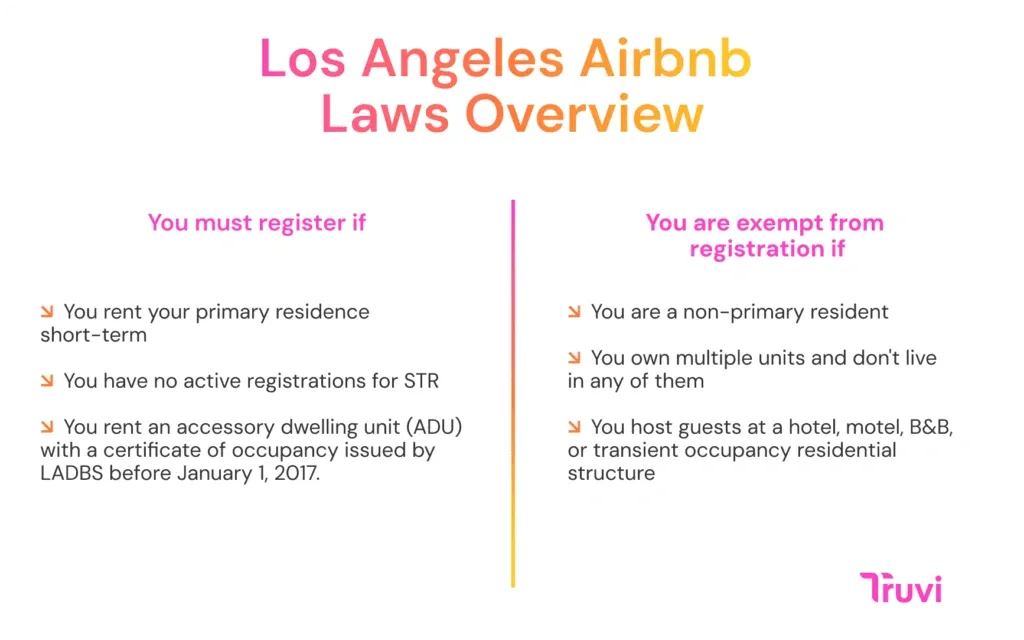
Image Source: Truvi
Los Angeles has specific rules about short-term rentals based on the Home-Sharing Ordinance. You need to know these requirements to list your property on platforms like Airbnb. Here are the three most important things that make your short-term rental legal.
Definition of Short-Term Rental: 30 Days or Less
Los Angeles airbnb laws define a short-term rental as renting a dwelling unit or part of it for 30 consecutive days or fewer. This applies to all platforms like Airbnb, VRBO, and other vacation rental services. The Home-Sharing Ordinance came into effect in November 2019 after being enacted in December 2018. It created rules to manage these temporary stays while keeping enough housing for permanent residents.
The city requires hosts to register and get an official number. You must show this number on all your ads and listings. Getting registered is your first step toward following the law and helps the city keep track of short-term rentals.
Primary Residence Requirement: 6-Month Minimum Stay
The biggest rule in Los Angeles short-term rental laws is about primary residence. You can only rent out the home where you live for at least six months each year[73][94]. This stops investors from buying multiple properties just for short-term rentals.
You can’t legally register multiple units as short-term rentals if you don’t live in them. This rule protects housing for long-term residents and keeps neighborhoods from turning into tourist spots.
When you register, you’ll need to prove it’s your main home. This usually means showing your driver’s license, utility bills, or tax documents.
Ineligible Properties: ADUs, Rent-Stabilized Units
Some properties can’t be registered for short-term rentals, even if they’re your primary home. Here’s what’s not allowed:
-
Rent-stabilized units (RSO): These are rental units built on or before October 1, 1978[94]. Even if you own and live in the unit, you still can’t use it for short-term rentals.
-
Accessory Dwelling Units (ADUs): These secondary units usually can’t be used for short-term rentals[73]. The only exception is for ADUs that got their certificate of occupancy before January 1, 2017.
-
Affordable housing: Properties with affordability rules or restrictions aren’t allowed for short-term rentals.
These rules protect affordable housing in Los Angeles. Research shows that short-term rentals can make rent more expensive for residents. That’s why the city strictly controls which properties can be used for home-sharing.
Breaking these rules comes with heavy fines – up to $586 per violation, going up to $5,869 for repeat offenses[94]. Both property owners and rental platforms can get in trouble for not following the rules.
Hidden Permit Rules Most Hosts Miss
LA has several hidden permit rules that catch many Airbnb hosts off guard. These rules might look small but can lead to big penalties or rejected applications if you miss them. Here are some crucial requirements that hosts often overlook.
Only One Active Home-Sharing Registration Allowed
LA strictly allows each person to register just one home-sharing rental unit at a time. This rule applies whatever number of properties you own. The city created this limit to stop multiple residential units from becoming mini-hotels and protect long-term housing availability.
This rule matches the main residence requirement. Since you can only have one main residence, you can only have one home-sharing registration. Property investors who own multiple units but don’t live in any of them can’t qualify for home-sharing.
Extended Home-Sharing Permit: Who Qualifies
The standard home-sharing permit in LA has a 120-day yearly cap on short-term rental operations. Hosts who want to rent beyond this limit can apply for an Extended Home-Sharing permit, but they need to meet extra requirements and pay more fees.
To qualify for extended home-sharing, hosts must:
-
Have operated under a regular home-sharing registration without violations
-
Pay additional application fees beyond the standard registration costs
-
Meet stricter neighborhood notification requirements
-
Provide proof of ongoing compliance with all home-sharing regulations
This extended permit lets hosts go beyond the 120-day cap. This makes it valuable for people who depend on short-term rentals as a major income source.
ADU Certificate of Occupancy Before Jan 1, 2017
LA’s Airbnb laws about Accessory Dwelling Units (ADUs) can be tricky. While ADUs usually can’t be used as short-term rentals, there’s one exception: ADUs with a certificate of occupancy issued before January 1, 2017, might qualify for home-sharing.
This cutoff date creates a big challenge for owners of newer ADUs. Planning to use your ADU for Airbnb? You’ll need specific papers from LA’s Department of Building and Safety that clearly show when your ADU’s occupancy permit was issued. Your application will fail without these documents.
Landlord Approval Requirement for Renters
Renters face an extra step that property owners don’t have to worry about. LA’s short-term rental rules say tenants must get their landlord’s written approval before they can register for home-sharing.
The landlord needs to sign a notarized affidavit that specifically allows home-sharing in that unit. Getting the document notarized prevents fake approvals and makes sure landlords know exactly how their property will be used.
The city won’t process applications without proper landlord authorization. Many renters get stuck here, especially those who only have verbal agreements with their landlords.
Tax and Reporting Laws That Can Trigger Fines
Tax compliance is a vital part of running a legal short-term rental business in Los Angeles. Many hosts think registering their property is enough to meet legal requirements. The reality shows ongoing tax requirements need regular attention and action.
14% Transient Occupancy Tax (TOT) Explained
The City of Los Angeles requires all short-term rental hosts to collect a 14% Transient Occupancy Tax on the listing price. This includes cleaning fees for stays of 30 nights or less. The tax applies to every booking you get, whatever platform you use to find guests. People often call it the “hotel tax” or “bed tax,” and it brings in much revenue for the city.
The difference between city and county rates matters – unincorporated areas of Los Angeles County charge a lower 12% TOT rate. You should know which jurisdiction your property belongs to so you can apply the right rate.
Airbnb makes life easier by automatically collecting and sending the 14% city TOT for hosts who use their platform. This helps many operators streamline their process. Yet you still have other tax duties to handle.
Monthly Reporting to Office of Finance
You must file monthly tax returns with the Los Angeles Office of Finance. This rule applies whatever platform you use or how many bookings you get.
The deadline for monthly returns falls on the 25th day of the following month. To cite an instance, you need to file July’s TOT report by August 25th. Remember to deduct taxes already collected and sent by Airbnb or other platforms when you submit these returns.
Late filing leads to growing penalties:
-
Original 10% penalty on unpaid tax amounts
-
Another 10% penalty kicks in if payment stays late after 30 days
-
Interest charges run 1.5% monthly on unpaid taxes until settled
These penalties stack up fast. Timely reporting helps you avoid unnecessary costs.
TOT Certificate Requirement for Non-Airbnb Platforms
Airbnb handles TOT collection automatically, but other platforms like VRBO or direct bookings put tax collection in your hands. These situations require you to get a Transient Occupancy Registration Certificate within 30 days of starting your rental business.
The Office of Finance issues this certificate so you can collect TOT from guests. Operating without it makes your tax collection illegal. You’ll need to provide details about your rental property and business operations during registration.
After you get your certificate, you must:
-
List TOT charges separately on guest receipts
-
Keep detailed records of all transactions for at least three years
-
Let tax authorities inspect your records when they ask
These tax requirements might look overwhelming at first. Notwithstanding that, good systems for tracking, collecting, and reporting TOT will protect you from pricey fines and penalties. This ensures your short-term rental stays within Los Angeles airbnb laws.
Safety and Advertising Rules You Must Follow
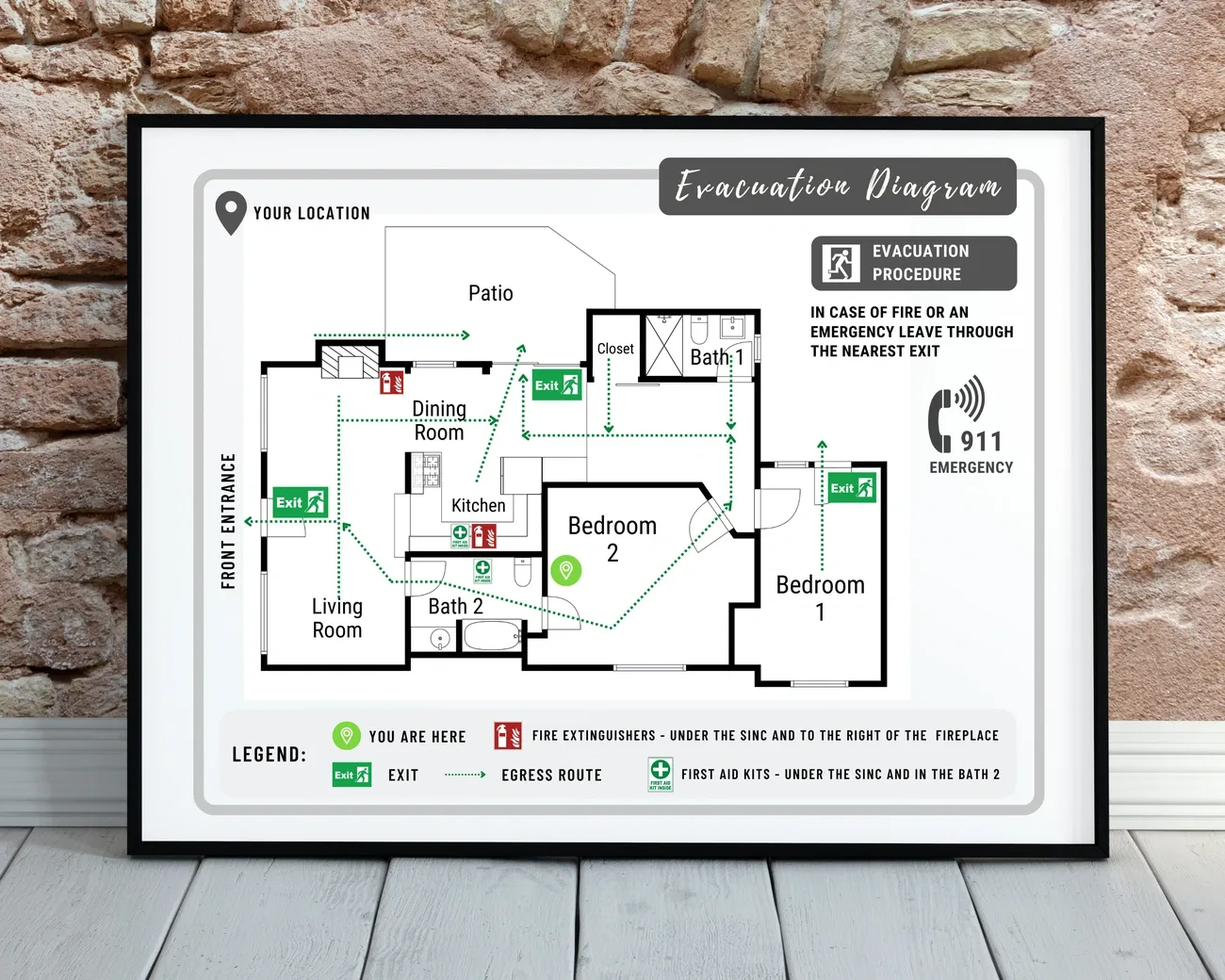
Image Source: Etsy
Safety compliance plays a crucial role in Los Angeles Airbnb regulations, yet many hosts tend to miss it. These rules protect your guests and keep you safe from liability and fines. Let’s get into the safety and advertising rules you need to follow.
Smoke and CO Detectors in All Bedrooms
Los Angeles short-term rental laws make it mandatory to have working smoke detectors in every bedroom and common area of your property. Carbon monoxide (CO) detectors are just as important, especially where fuel-burning appliances are used. You must test and maintain these devices regularly.
Without doubt, these safety devices matter so much that Airbnb gives eligible hosts free self-contained, battery-powered combination smoke and CO alarms. Remember though – this generous offer doesn’t mean you can skip local regulations that might need multiple alarms throughout your property.
Emergency Exit Map and Fire Extinguishers
Your Los Angeles Airbnb needs clear emergency exit routes. You should post an emergency evacuation map where guests can easily see it inside your property. This map needs to show all exits and escape routes that guests can use in emergencies.
Your property must have these safety features:
-
Fire extinguishers on every floor
-
Clearly marked emergency exits free from obstructions
-
Written emergency contact information
-
Instructions for dialing 9-1-1
These safety measures are the foundations of guest protection and peace of mind.
Permit Number Must Be Displayed in Listings
Los Angeles Airbnb hosts need to show their valid registration number:
-
In all online listings and advertisements
-
Physically posted inside the property
This rule helps authorities spot compliant properties and lets guests verify they’re booking a legal rental. Your listing might disappear from booking platforms if you don’t display your permit number properly.
Guest Limit: 2 per Bedroom + 2 Extra
Guest limits in Los Angeles are pretty straightforward. You can have two guests per bedroom plus two more guests. A two-bedroom property can host six guests max (2×2+2=6).
The city won’t allow more than 12 guests per booking, whatever the bedroom count. This rule helps keep neighborhoods peaceful while letting you use your property reasonably. Going over these limits could lead to neighbor complaints and violations.
These safety and advertising rules show your steadfast dedication to responsible hosting and guest safety. They’re not just about following the law – they’re about being a great host.
Penalties and Legal Risks for Non-Compliance
LA’s Airbnb law violations can get pricey. The city adjusted its penalty rates based on the Consumer Price Index for 2025.
Daily Fines: Up to $2,422.89 for Hosts
LA has updated its fine structure, which now varies by violation type:
-
Property owners must pay $605.73 daily for advertising unregistered primary residences
-
The city charges $2,422.89 per day to hosts who operate beyond 120 days without permits
-
The city’s enforcement brought in $57,128 in fines last year, though hosts paid just $9,827
Platform Fines: $1,211.33 per Illegal Listing
Airbnb and Vrbo face their own set of penalties:
-
Each unregistered property listing costs platforms $1,211.33 daily
-
Vrbo settled with the city for $150,000 after processing thousands of illegal bookings
Discretionary Review and Permit Revocation
Hosts who break the rules face additional consequences:
-
The city reviews their rental property
-
Officials can suspend or revoke registration certificates
-
Booking platforms remove properties that violate city rules
Legal Action by City Attorneys
Repeat violations lead to serious consequences:
-
City attorneys take legal action against frequent offenders
-
Courts can permanently ban illegal rentals
-
Platforms that break anti-price-gouging laws during emergencies pay up to $30,000 per violation
The city uses contractors like Granicus to track compliance. They found over 2,200 illegal listings last year. Hosts must learn these penalties to operate legally in Los Angeles.
Conclusion
Airbnb hosts in Los Angeles must know these laws to run their business legally and dodge hefty penalties. Your rental needs to be your main home where you stay for at least six months each year. On top of that, you’ll need proper registration shown on all listings, and you can only register one property.
Your guests’ safety comes first. Legal operation requires smoke detectors, carbon monoxide alarms, emergency exit maps, and fire extinguishers. The guest count rule keeps neighborhoods peaceful – two people per bedroom plus two extra guests.
The tax part needs attention too. You’ll have to collect and report a 14% Transient Occupancy Tax to the Office of Finance every month. This applies even when Airbnb handles the collection. Many hosts skip these monthly reports and end up facing big penalties.
Breaking these laws costs more than ever. Hosts now face daily fines up to $2,422.89, while platforms pay $1,211.33 per illegal listing. The city uses special contractors to track compliance, making it tough to get away with violations.
This piece should help you understand LA’s short-term rental rules better. These regulations protect your business, guests, and neighborhood. The rules have affected the market by a lot – listings dropped by 78% since they started. Your best bet for success in LA’s short-term rental market is to stay informed and follow the rules.
FAQs
Q1. What are the primary residence requirements for Airbnb hosts in Los Angeles? To operate legally, hosts must rent out their primary residence where they live for at least six months of the year. This rule prevents investors from using multiple properties exclusively for short-term rentals.
Q2. How many properties can a host register for short-term rentals in Los Angeles? Los Angeles strictly limits each person to registering only one home-sharing rental unit at a time, regardless of how many properties they own. This aligns with the primary residence requirement.
Q3. What is the Transient Occupancy Tax (TOT) rate for short-term rentals in Los Angeles? The TOT rate in Los Angeles is 14% on the listing price, including cleaning fees, for all stays of 30 nights or less. Hosts must collect and report this tax, even if platforms like Airbnb automatically collect it.
Q4. What are the occupancy limits for short-term rentals in Los Angeles? The occupancy limit is two guests per bedroom plus two additional guests, with a maximum cap of 12 guests per booking regardless of bedroom count. For example, a two-bedroom property can accommodate up to six guests.
Q5. What penalties do hosts face for non-compliance with Los Angeles Airbnb laws? Penalties for non-compliance can be severe. Hosts operating beyond the 120-day limit without proper permits can face fines of up to $2,422.89 per day. Additionally, hosts may face permit revocation, removal from booking platforms, and potential legal action for persistent violations.

